Nigeria votes on January 16. INEC says its technology is ready, and names AI as a new threat
New BVAS machines, a 103 million-strong voter register checked against NIN, and a nationwide mock accreditation this month. The tech behind the 2027 election, explained.

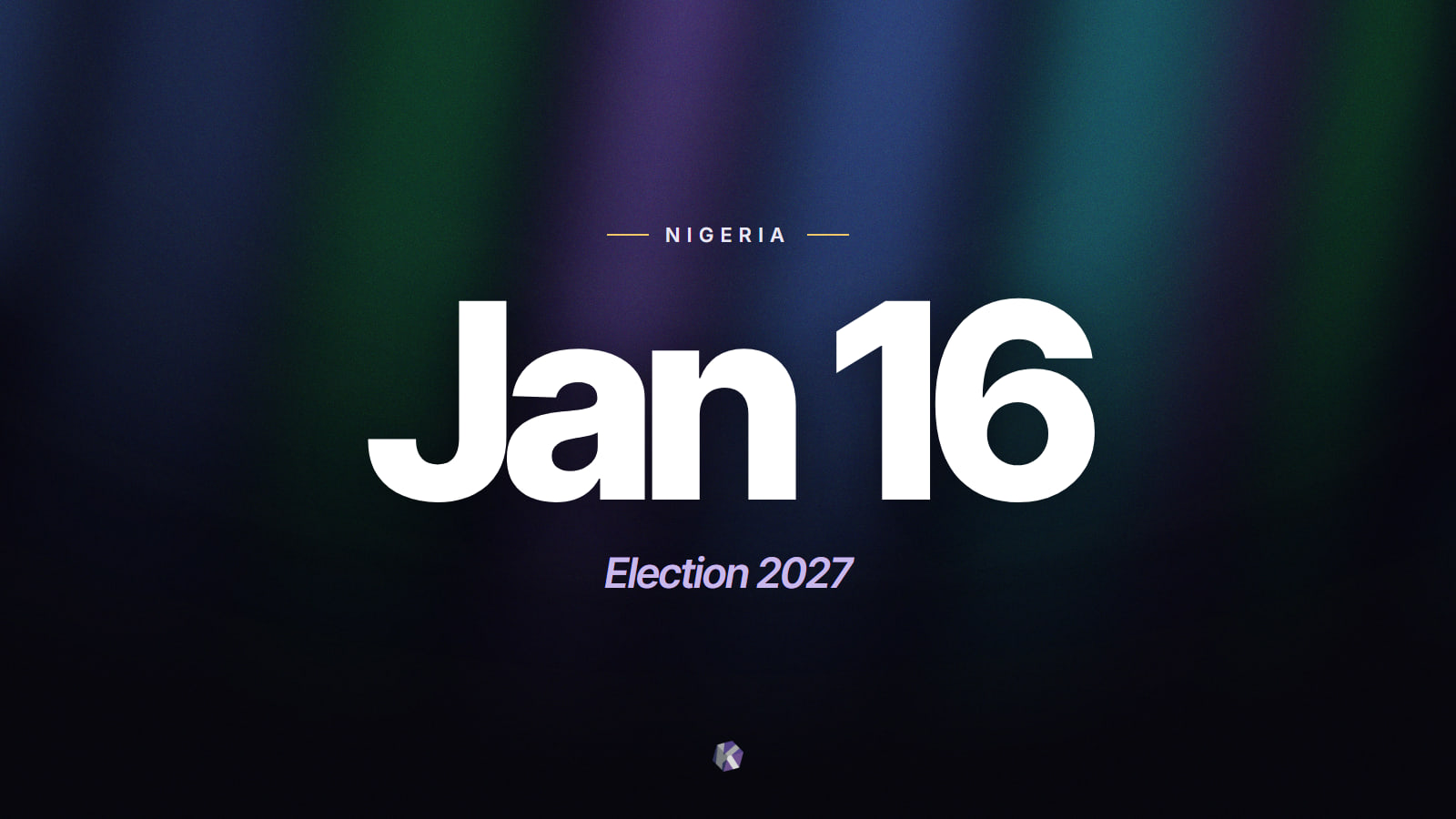
Nigeria’s next general election is close. The presidential and National Assembly elections hold on January 16, 2027, and the governorship and state assembly elections on February 6, 2027, under the timetable INEC revised after the Electoral Act 2026 became law on February 13.
Technology sits at the centre of how the vote will be run and trusted.
BVAS and IReV
The Bimodal Voter Accreditation System (BVAS) checks voters’ fingerprints or faces at polling units and sends a photo of each unit’s result sheet to the IReV portal, where anyone can view it.
Trust in the system took a knock in 2023, when presidential results were slow to appear on IReV, which INEC blamed on a technical glitch. INEC says it has since added safeguards against tampering and tested them in recent elections, including the FCT Area Council polls, where it says the results uploaded to IReV matched. It reports upload rates above 98% in recent elections, though that is INEC’s own figure, not an independent audit.
New machines, bigger budget
- INEC says it has acquired 57,000 new BVAS devices.
- Its proposed budget for the elections is about ₦873.8 billion, with about ₦209.2 billion for technology, including money for more BVAS machines.
The register
The national register of voters has passed 103 million, and collection of permanent voter cards (PVCs) is under way. INEC has also started matching the register against National Identification Numbers to weed out duplicates and dead voters.
In November, INEC is running a nationwide mock accreditation to test the machines and the people who will use them on election day.
The new threat: AI
INEC’s chairman has named misinformation, disinformation and the misuse of artificial intelligence as emerging threats to the election. Fake audio of candidates, doctored videos and fabricated result sheets are now cheap and quick to make, and they spread fastest on WhatsApp.
What you can do
- Collect your PVC early and confirm your polling unit.
- Follow results on IReV and from INEC officials, not forwarded screenshots.
- Before you forward a shocking clip, check it. We have a guide to spotting deepfakes.
Sources
- ThisDay: National register of voters hits over 103m
- Gazette: INEC upgrades BVAS to curb result manipulation
- Arise: INEC proposes ₦873.8bn for 2027 elections
- Nairametrics: INEC integrates NIN to clean the voter register
- The Guardian: INEC plans November mock accreditation
- ThisDay: INEC to issue a revised timetable under the new Electoral Act


Comments
No comments yet. Start the conversation.