AI could leave most Nigerians behind, a new report warns. Language is a big reason why
The “Make This Matter” report says AI built only for the market will serve rich, English-speaking city dwellers first. The World Bank has raised a similar alarm.

AI tools are spreading fast in Nigerian offices. A new report asks a harder question: who are they actually built for?
What the report says
The report, called “Make This Matter”, was released in Nigeria by the Goalkeepers community and Gatefield. It argues that AI built in and for Nigeria should reflect local needs, use local data and be fairly accessible. Left purely to the market, it warns, AI will mainly serve wealthy, English-speaking city dwellers, and leave underserved communities further behind.
The World Bank raised a similar alarm in October, warning that the benefits of AI risk bypassing Africa’s poor.
Why language is the big problem
Nigeria has more than 500 languages. Most AI systems learn from text on the internet, and the internet is overwhelmingly English. There is far less written Hausa, Igbo, Yoruba or Nigerian Pidgin online, and much less again for smaller languages. So the tools tend to be excellent in English, patchy in the big Nigerian languages and close to useless in the rest.
That matters because AI is fast becoming the front door to services. If health information, farming advice, banking help and government services move to AI chat, the people who can’t use it in their own language get a worse version of all of them.
Cost and access
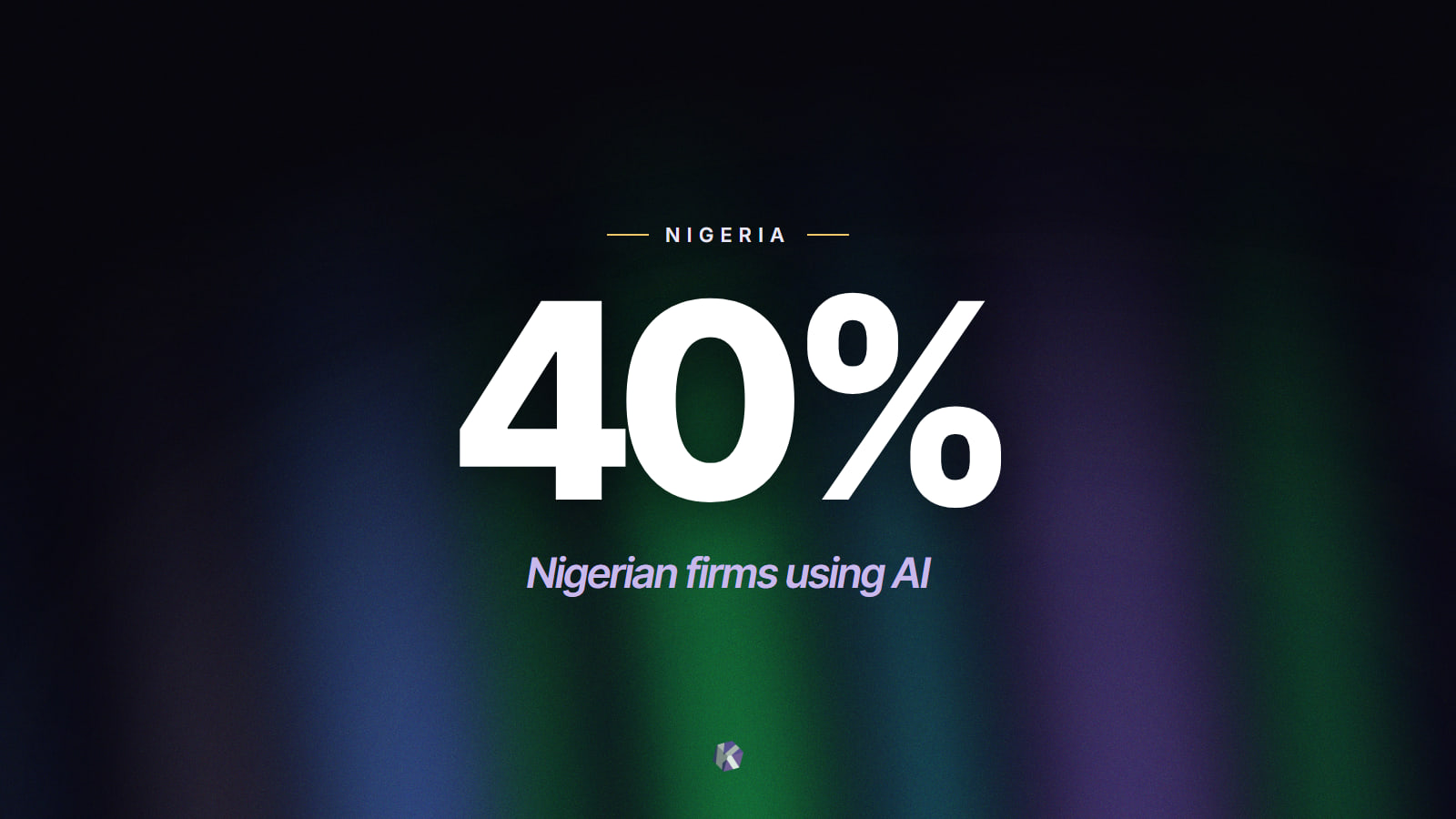
Language isn’t the only gap. AI needs a smartphone, data and, for the best tools, a dollar subscription. The World Bank found that about 40% of formal Nigerian firms now use AI, but formal firms are a small slice of Nigeria’s economy. Millions of traders, farmers and artisans are outside that number.
What would help
- Local language data. Recording, transcribing and publishing Nigerian languages so AI can learn them, with communities sharing in the benefit.
- Public use cases. Government and NGOs paying for AI that solves problems the market ignores, such as rural health and farming.
- Voice first. Many Nigerians are more comfortable speaking than typing. AI that works well by voice, in local languages and on cheap phones, would reach far more people.
Nigeria’s government has backed efforts to build AI that understands Nigerian languages. The report’s message is that these projects are not a side issue. They decide whether AI narrows Nigeria’s gaps or widens them.

Comments
No comments yet. Start the conversation.