AI was blamed for 121,401 US job cuts this year. The numbers tell a messier story
Companies are citing AI as a reason for layoffs more than ever. But the wider job data, and some of the companies themselves, suggest it is not always the real reason.

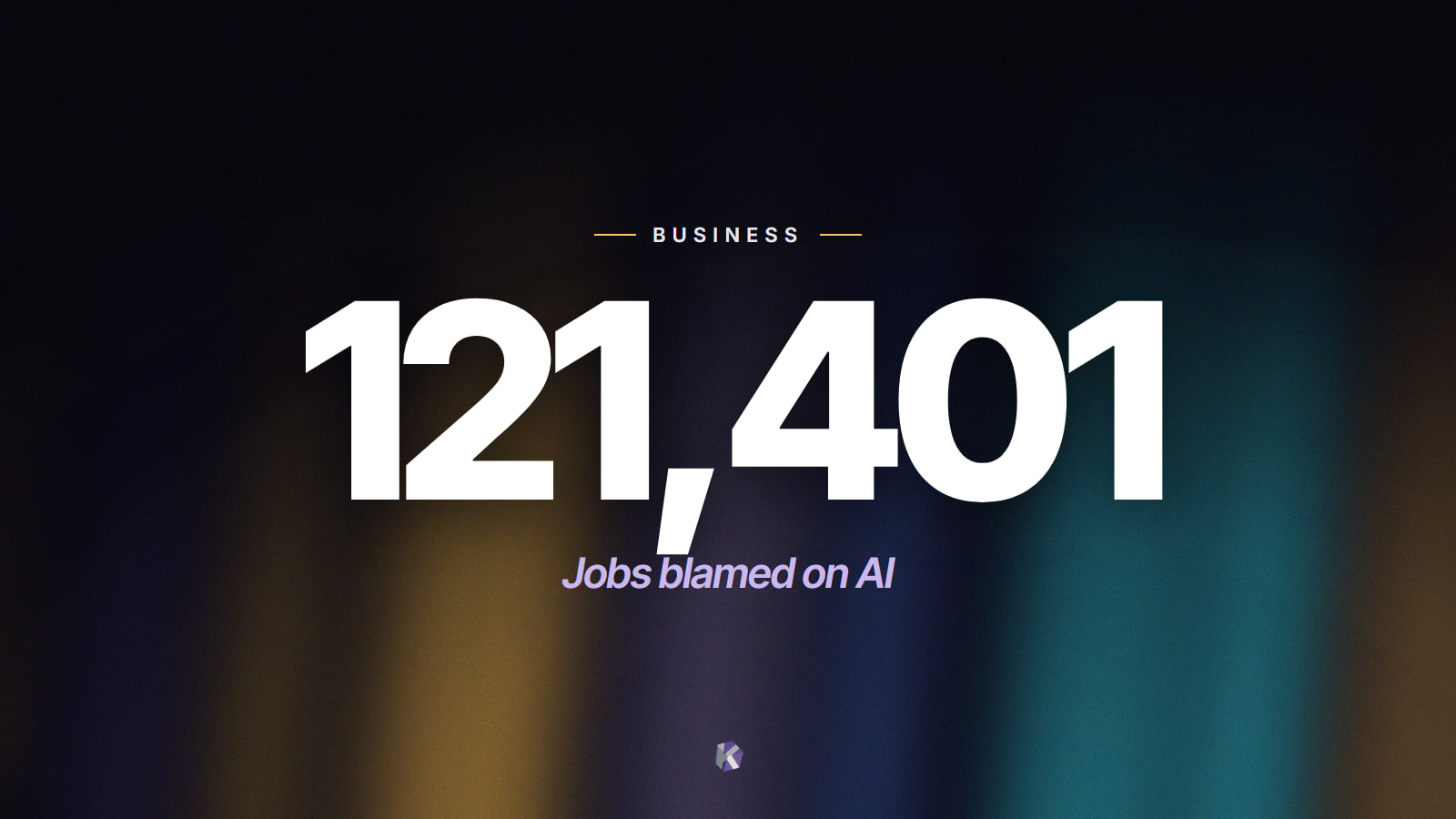
US employers have blamed artificial intelligence for 121,401 job cuts so far this year, according to the outplacement firm Challenger, Gray & Christmas. It is the clearest sign yet that AI has become a standard reason companies give for letting people go.
Whether it is the real reason is another question.
What the numbers say
- One tracker counts 120,136 AI-linked cuts from January to September, about 21% of all 573,195 announced cuts.
- AI was the top reason given in March, and May was the biggest month on record for AI-linked layoffs.
- Bloomberg’s reading of official US data shows payrolls in finance and in the information sector falling by an average of about 28,000 jobs a month in 2026, even as the wider economy kept adding jobs.
- Entry-level hiring has taken a particular hit, CBS News reports, as companies use AI for tasks they once gave to juniors.
Why it’s messier than it looks
Saying “AI” sounds better to investors than saying “we overhired” or “sales are down”. One industry survey found that close to six in ten companies admit they describe layoffs or hiring freezes as AI-driven when the real reason is money. And overall US job cuts in October fell to a three-year low, which doesn’t fit a story of AI wiping out work everywhere.
The honest picture: AI is changing some jobs fast, especially in customer support, back-office work, content and junior coding. It is also a convenient label for cuts that would have happened anyway.
What it means in Nigeria
These are US figures; Nigeria has no equivalent tracker. But many Nigerians work remotely for US and European companies, or in outsourcing, support and junior tech roles that are exactly where AI is biting first. A few practical moves:
- Use the tools. People who get more done with AI are harder to replace than people who don’t.
- Move up the chain. Judgement, client relationships, local knowledge and owning results are harder to automate than producing first drafts.
- Show your output. Portfolios, shipped projects and measurable results matter more when entry-level hiring is thin.
AI may not be taking as many jobs as the headlines say. It is changing which ones are safe.

Comments
No comments yet. Start the conversation.