₦15 billion just to issue a dollar stablecoin: inside the CBN’s new crypto rules
The Central Bank wants every peer-to-peer crypto trade tied to a bank account with a matching BVN. Here’s what changes for traders, exchanges and startups.

Nigeria’s crypto market has new house rules, and the bar is high. In early November, the Central Bank of Nigeria set out how stablecoin issuers and peer-to-peer (P2P) crypto trading will work under its watch.
The headline number
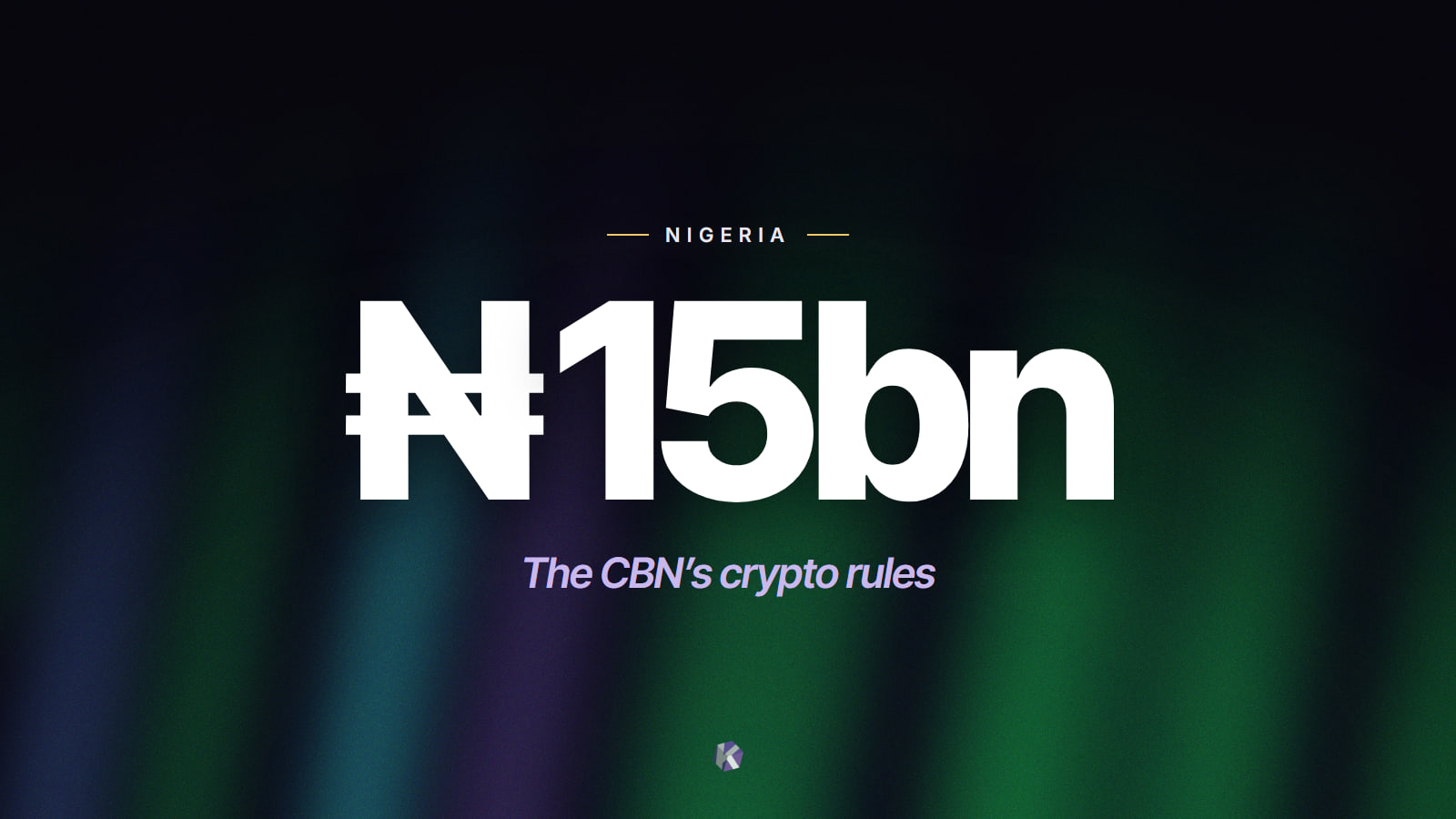
A company that wants to issue a stablecoin backed by a foreign currency, such as a dollar token, will need ₦15 billion in capital, about $11 million. Reports say naira-backed stablecoins carry a lower bar of ₦10 billion. These sit on top of whatever the Securities and Exchange Commission demands, not instead of it.
That rules out most startups. Issuing your own stablecoin is now a game for banks and the biggest, best-funded exchanges.
What changes for P2P traders
P2P is how most Nigerians buy USDT and bitcoin: you send naira to a seller, and the platform releases the crypto. Under the new rules:
- Every P2P crypto payment must be linked to a bank transaction.
- Before tokens are released, the name on the naira account that pays must match the buyer’s BVN.
- Platforms that offer P2P trading need the CBN’s explicit approval.
- Operators reportedly have 180 days to comply.
The target is the third-party payment, where someone pays from an account that isn’t theirs. It has long been used to hide who is trading and to move stolen money. If you trade honestly, the practical change is small: pay only from your own account, in your own name, and expect more checks. Some P2P merchants who relied on other people’s accounts may simply disappear.
The SEC’s side
The SEC has been tightening too. In January it raised the minimum capital for crypto exchanges to ₦2 billion. An August 20 draft proposed capital of between ₦200 million and ₦2 billion for exchanges, custodians and stablecoin issuers, depending on what they do, and asked stablecoin issuers to hold liquid assets worth 120% of what they owe holders. Reports say firms have until June 30, 2027 to comply.
Who wins and who loses
Big licensed exchanges and banks can live with this, and may even gain as smaller rivals drop out. Small startups that hoped to launch their own tokens will have to partner with licensed issuers instead. For ordinary users, the rules should mean fewer scams and frozen accounts, at the cost of more paperwork and, possibly, fewer places to trade.
It is a long way from 2021, when the CBN told banks to close crypto firms’ accounts. Nigeria has moved from trying to keep crypto out to deciding exactly who gets to run it.
Sources
- TheCondia: CBN’s new crypto rules put a ₦15bn price tag on dollar stablecoins
- Innovation Village: CBN mandates ₦15bn capital for foreign stablecoin issuers
- Nairametrics on the CBN rules
- Serrari: 120% liquidity coverage floor
- Nairametrics: SEC raises exchange capital to ₦2 billion
- Aluko & Oyebode: Nigeria’s digital asset regulatory reset (PDF)


Comments
No comments yet. Start the conversation.